

Famous Waterfalls in India Worth Visiting for Nature Lovers
Experience the beauty of India’s most famous waterfalls, from powerful monsoon cascades to year-round natural wonders that every traveler should visit.
This guide covers the famous waterfalls in India that genuinely earn the trip, with honest notes on when they actually flow, how hard they are to reach, and where to base yourself. No filler, no recycled brochure copy -just what I’d tell a friend.
Table of Contents
India’s Top Waterfalls at a Glance
If you only have time to skim, here’s the shortlist of India’s most famous waterfalls and what makes each one a record-holder or a standout:
- Kunchikal Falls (Karnataka) – the highest waterfall in India at 455 m, tiered and rain-fed.
- Nohkalikai Falls (Meghalaya) – India’s tallest single-plunge waterfall at 340 m, with a turquoise pool.
- Chitrakote Falls (Chhattisgarh) – the widest waterfall in India (~300 m in monsoon), the “Niagara of India”.
- Jog Falls (Karnataka) – arguably India’s most iconic falls, dropping 253 m in four named streams.
- Dudhsagar Falls (Goa – Karnataka) – the four-tiered “Sea of Milk,” famous for its railway-bridge view.
- Athirappilly Falls (Kerala) – Kerala’s largest, a frequent backdrop in South Indian cinema.
- Hogenakkal Falls (Tamil Nadu-Karnataka) – the “Niagara of the South,” known for coracle rides.
- Barehipani & Joranda Falls (Odisha) -towering cascades hidden inside Simlipal Tiger Reserve.
Now let’s get into why each deserves a place on your list -and a few beautiful, lesser-known falls the crowds haven’t found yet.
Jog Falls, Karnataka: The Falls That Defined “Famous”
For generations of Indian travelers, Jog Falls was the waterfall. Fed by the Sharavathi River in Shimoga district, it drops roughly 253 metres and splits into four distinct streams that old textbooks lovingly named Raja, Rani, Roarer, and Rocket -a regal column, a quieter veil, a thundering torrent, and a series of jetting bursts. When the Sharavathi is in full spate, the four merge into one of the most spectacular sheets of falling water in Asia.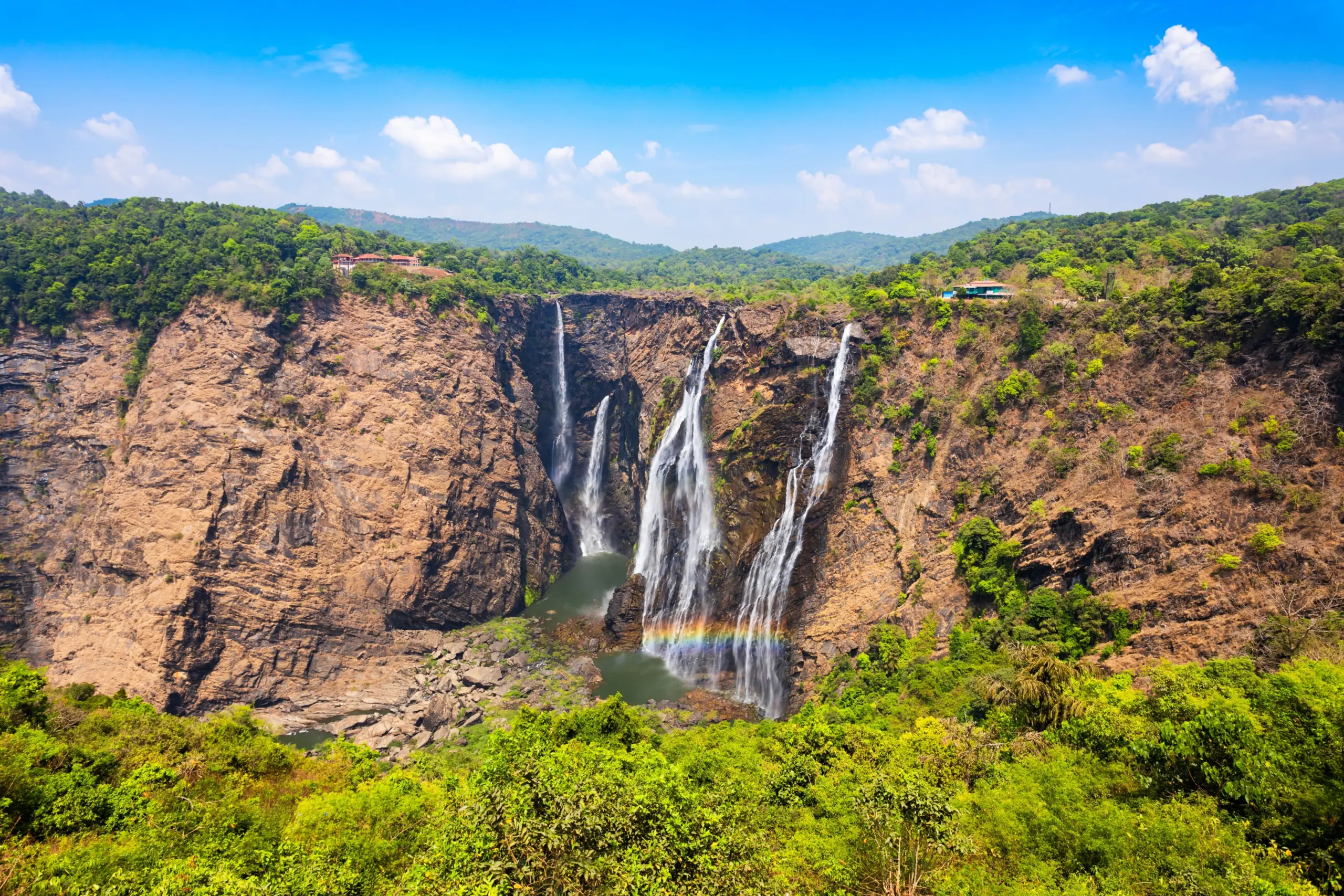
Here’s the part most listicles won’t tell you plainly: the Linganamakki Dam upstream regulates the flow, so outside the monsoon, Jog can look thin and disappointing. I’ve watched first-time visitors arrive in March, stare at the bare rock walls, and wonder what the fuss was about. Come instead in August or September, ideally a day or two after heavy rain, and you’ll understand why it tops every list of amazing waterfalls in India. There are roughly 1,400 steps down to the base if you want the full frontal view, plus the British Bungalow viewpoint across the gorge for the postcard angle.
Best for: Drive-up convenience, classic grandeur, families who don’t want a hard trek.
Dudhsagar Falls, Goa
Few places with waterfalls are as instantly recognizable as Dudhsagar, where the Mandovi River tumbles about 310 metres down a black cliff in four frothing tiers. The name means “Sea of Milk,” and during the monsoon the comparison writes itself -the water churns so white it looks like spilled cream. What makes Dudhsagar one of the most photographed and beautiful waterfalls in the country is the old railway bridge slicing across its face, with trains rumbling past the cascade.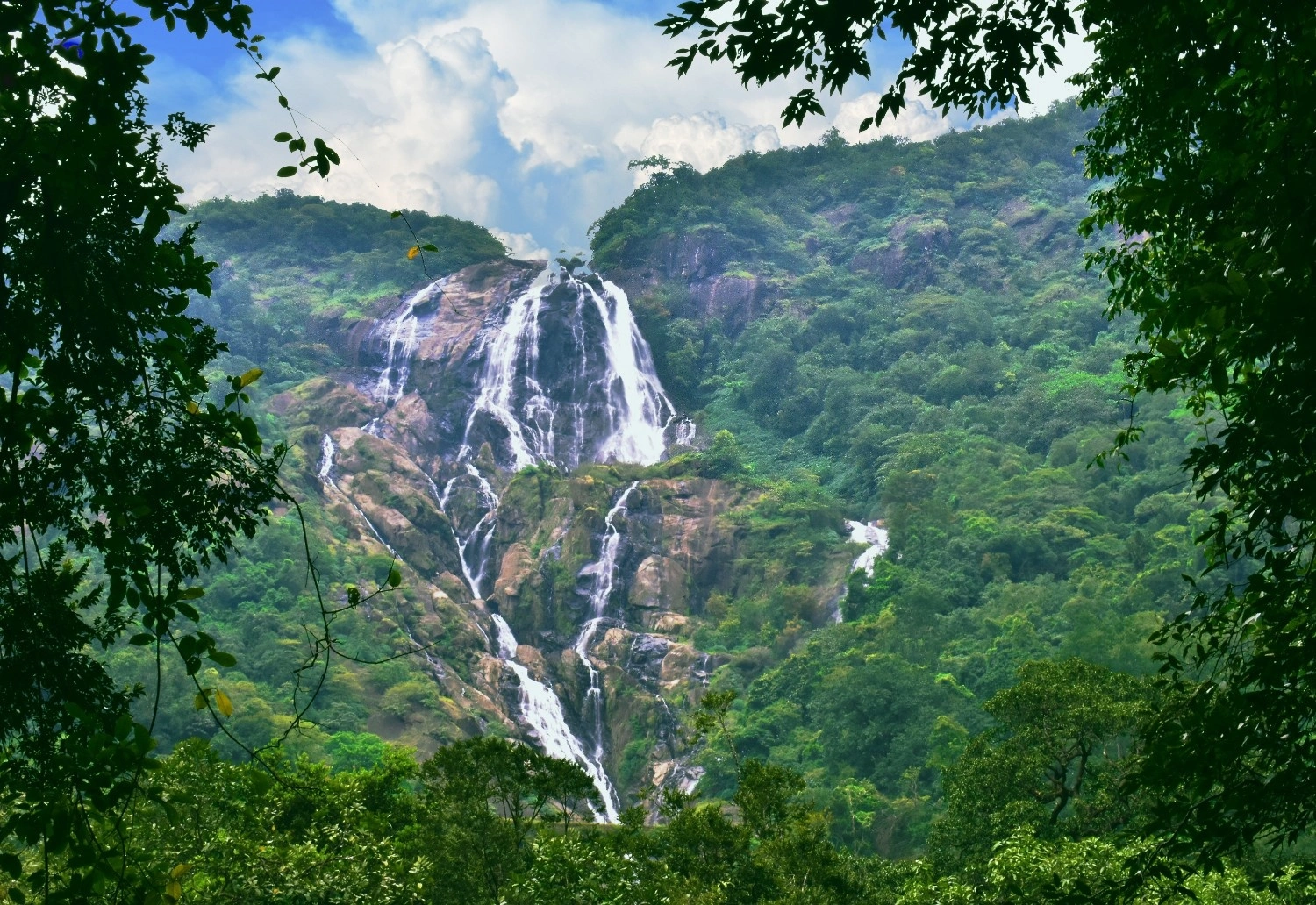
Reaching it is half the adventure. The falls sit inside Bhagwan Mahaveer Sanctuary and Mollem National Park on the Goa-Karnataka border, so you’ll either trek in, take the train past Castle Rock, or join a permitted jeep safari from Collem village. This is leopard, gaur, and hornbill country, so the journey doubles as wildlife photography. Note that swimming access and jeep operations vary by season and forest-department rules, so confirm current conditions before you go.
Best for: Adventure seekers, trekkers, monsoon photographers.
Book Villa In Goa
Nohkalikai Falls, Meghalaya: India’s Tallest Plunge
While Kunchikal wins on total height, Nohkalikai is the one that stops you mid-sentence. Near Cherrapunji in the East Khasi Hills -one of the wettest places on Earth -it free-falls 340 metres in a single uninterrupted plunge, making it India’s tallest plunge waterfall. At the base sits a pool the colour of green glass, fed by the relentless rain that defines this corner of the Northeast.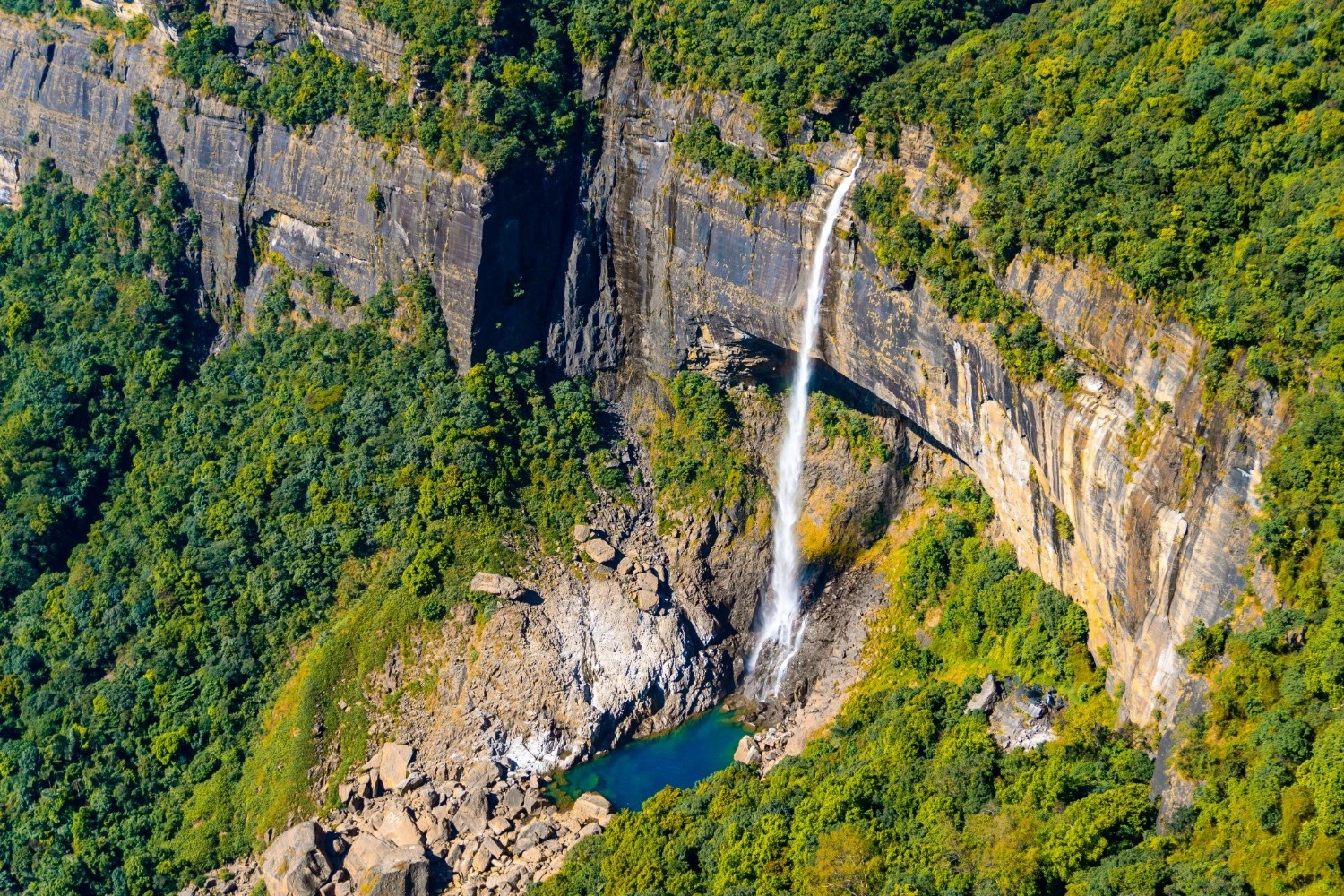
The name carries a haunting local legend about a woman named Likai, which only adds to the atmosphere when monsoon mist drifts across the cliff. If you want a genuinely different waterfall experience from the Western Ghats classics, the rain-soaked plateaus of Meghalaya -with Nohkalikai, the seven-segmented Nohsngithiang (Mawsmai) Falls, and Kynrem Falls all within reach -are unmatched. Visit between September and November, when the falls still roar but the clouds lift enough to actually see them.
Best for: Photographers, plunge-waterfall purists, Northeast explorers.
Athirappilly Falls, Kerala: The Niagara of India
On the Chalakudy River in Thrissur district, Athirappilly is Kerala’s largest waterfall and a permanent fixture on lists of India’s top waterfalls. It isn’t tall -around 24 metres -but it’s wide, lush, and framed by the kind of dense Western Ghats rainforest that’s home to the Great Hornbill and the lion-tailed macaque. If the setting feels cinematic, that’s because it is: filmmakers have used Athirappilly as a backdrop for decades, which is partly how it became one of the most famous waterfalls in India.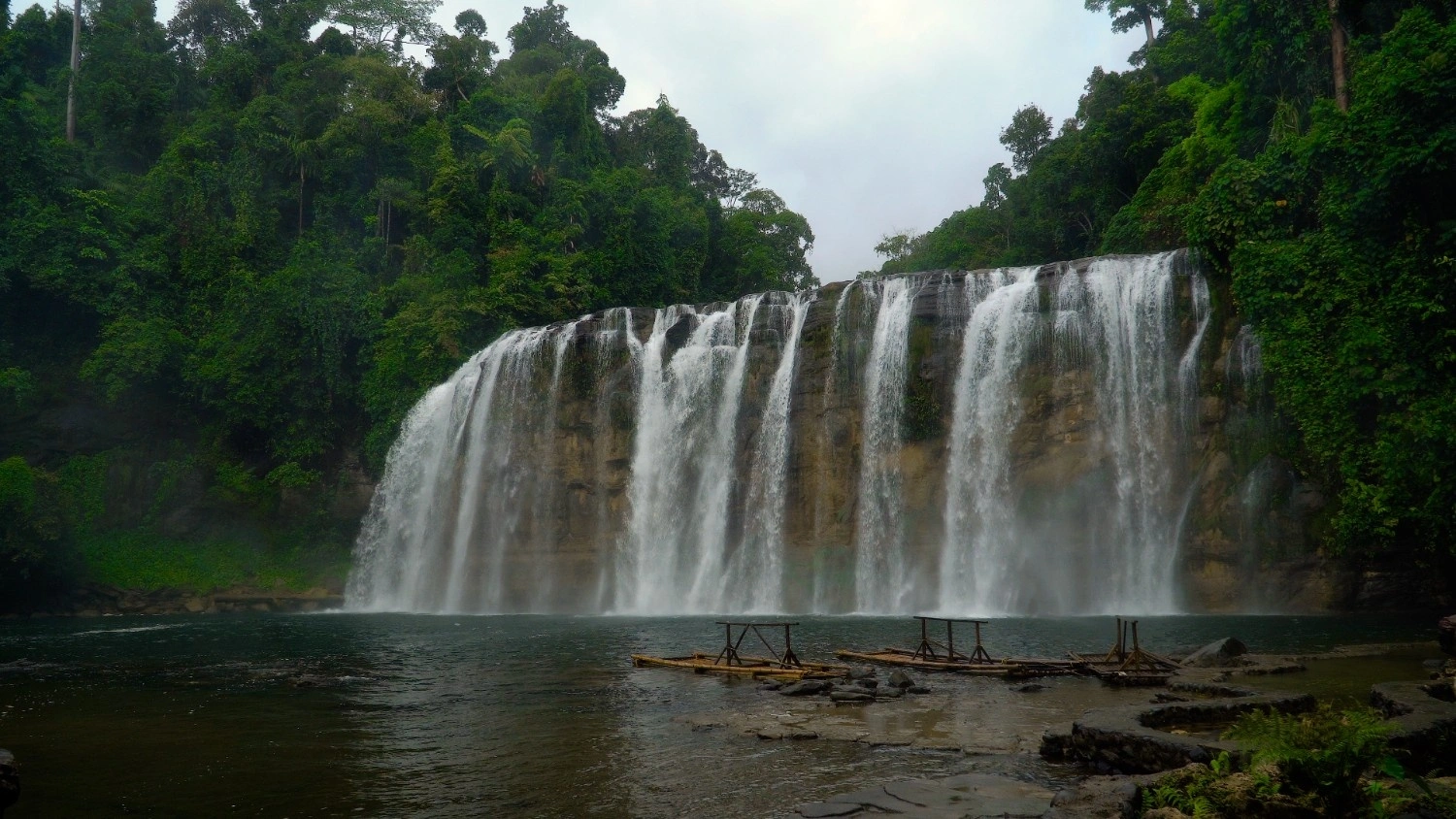
Pair it with the nearby Vazhachal Falls and a slow drive through the Sholayar ranges for a perfect day. The whole stretch is part of the Western Ghats UNESCO World Heritage landscape, so the biodiversity is as much the attraction as the cascade.
Best for: First-timers to Kerala, easy access, rainforest scenery.
Kunchikal Falls, Karnataka: The Highest in India
Here’s where I clear up the single most-confused fact about Indian waterfalls. Kunchikal Falls, on the Varahi River near Agumbe in Shimoga district, is the highest waterfall in India at 455 metres (1,493 feet) by the World Waterfall Database -taller than Nohkalikai. The catch is that it’s tiered, cascading down rocky boulders rather than dropping in one clean plunge, which is why Nohkalikai keeps the separate “tallest plunge” title.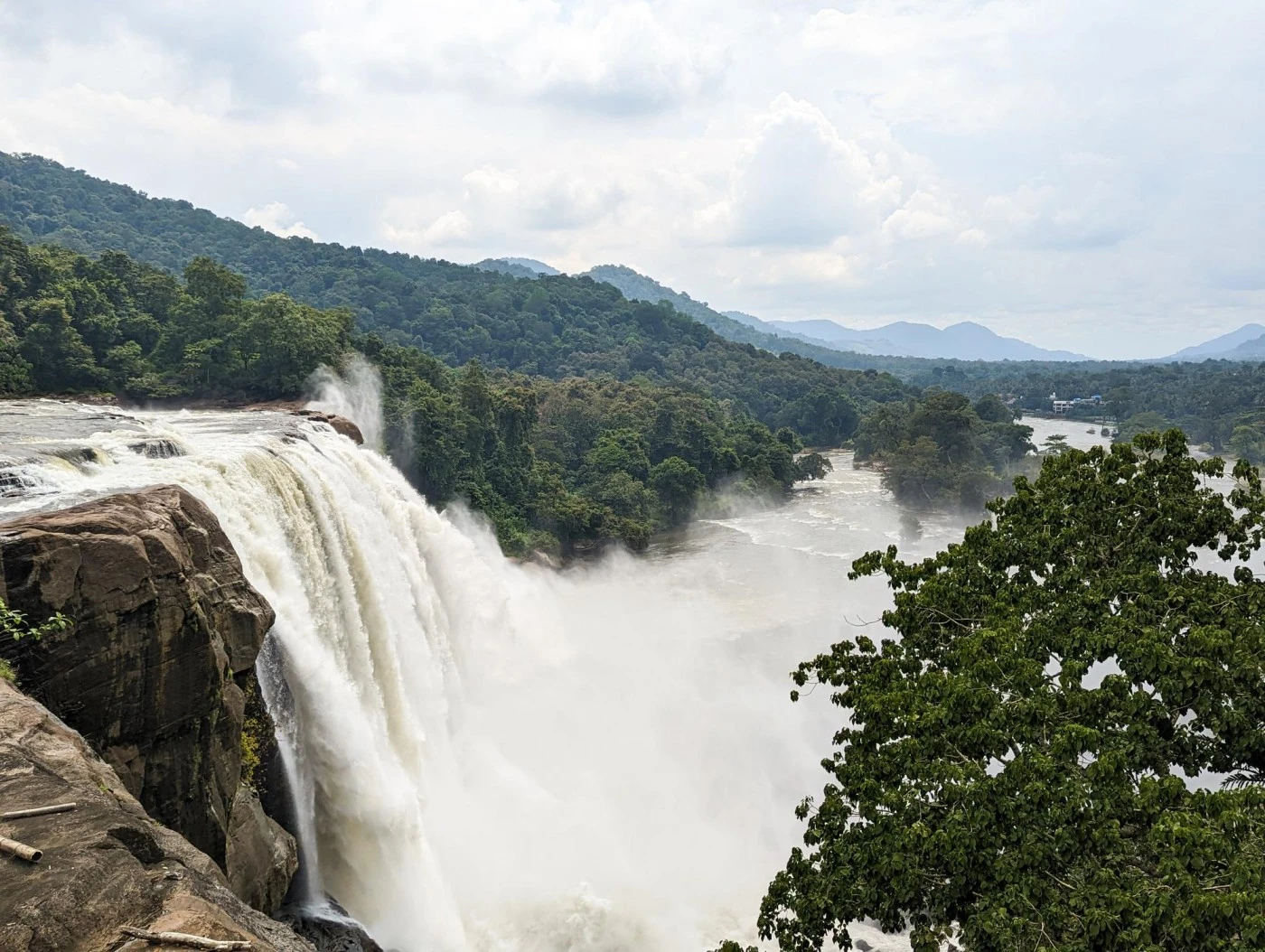
The honest caveat: after the Mani Dam was built, Kunchikal’s flow shrank dramatically, and it now performs only during the July-September monsoon. It also sits inside a restricted Karnataka Power Corporation zone, so you’ll need a gate pass to visit. Plan accordingly, time it for peak rain, and you’ll see India’s tallest waterfall the way it’s meant to look.
Best for: Record-chasers, monsoon visitors, Agumbe rainforest lovers.
Chitrakote Falls, Chhattisgarh: The Widest in India
If Kunchikal is about height, Chitrakote is about sheer breadth. On the Indravati River near Jagdalpur in Bastar district, this is the widest waterfall in India, spreading to nearly 300 metres across a horseshoe cliff during peak monsoon. The 29-metre drop earns it the nickname “Niagara of India” -and in flood, with reddish silt-laden water curving across the full arc of the gorge, the comparison holds up better than you’d expect.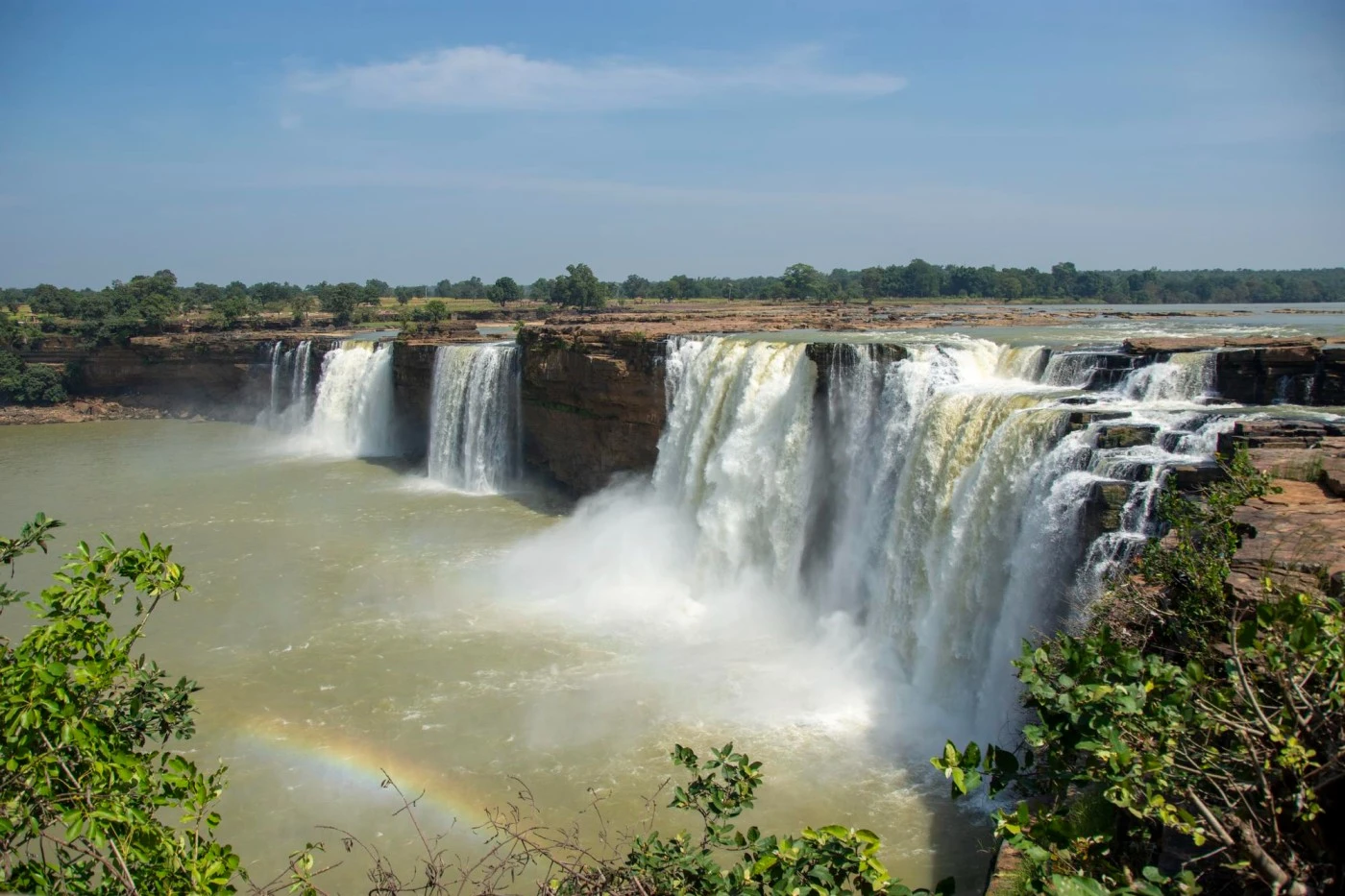
What I love about Chitrakote is how unspoiled it still feels. This is tribal Bastar, layered with Shiva shrines and grottoes, and the falls remain well off the mainstream circuit. Recent state tourism work has added night illumination, viewing decks, and a better approach road from Jagdalpur, so access keeps improving without the place losing its soul. Go in July to October for full width; come in winter for calmer, more comfortable sightseeing.
Best for: Travelers who want scale without crowds, culture-and-nature combos.
Hogenakkal Falls, Tamil Nadu: Coracles and Carbonatite
Straddling the Tamil Nadu-Karnataka border on the Kaveri River, Hogenakkal is the “Niagara of the South” -though it’s really a cluster of carbonatite-rock cascades rather than one grand drop. The signature experience here is climbing into a coracle, the round bamboo-and-hide boat, and being spun right up to the base of the falls. Add the famous oil-massage stalls and natural fish “spas,” and Hogenakkal becomes one of the more sensory, lived-in waterfall outings in India.
The rocks here are among the oldest in South Asia, which is the kind of detail that makes a good local guide worth hiring. Visit after the monsoon (roughly October to January) when the Kaveri is strong but the coracle rides are still safe.
Best for: Day-trippers from Bangalore or Chennai, hands-on river experiences.
Barehipani & Joranda Falls, Odisha: Hidden Inside a Tiger Reserve
Tucked deep in Simlipal Tiger Reserve in Mayurbhanj district, Barehipani is one of India’s tallest waterfalls -a two-tiered giant that drops hundreds of metres off the Meghasuni hills, with the nearby Joranda Falls plunging in a single column. These aren’t drive-up attractions. You’ll need Forest Department permission, ideally a guide, and a tolerance for rough tracks through elephant and tiger habitat.
That difficulty is exactly the point. Few beautiful waterfalls in India feel this remote and earned. Visit post-monsoon (October onward), when Simlipal is green, the rivers are full, and the park gates are reliably open.
Best for: Wildlife-and-waterfall purists, Odisha explorers, off-grid adventurers.
Best Easily Accessible Waterfalls in India
Not every trip allows for a forest trek or a permit run. If you want maximum payoff for minimum effort, these are the most accessible famous waterfalls in India:
- Jog Falls (Karnataka) – you can park and walk to the viewpoint; the base requires steps but the panorama doesn’t.
- Athirappilly Falls (Kerala) – a short, easy walk from the road, family- and senior-friendly.
- Hogenakkal Falls (Tamil Nadu) – reachable by road from Bangalore or Salem, with boats doing the work.
- Elephant Falls (Meghalaya) – a tidy three-tiered cascade just outside Shillong with built steps.
- Dudhsagar (via train) – if trekking isn’t your thing, the railway route delivers the view with zero hiking.
These are the falls I recommend to travelers with kids, older parents, or tight schedules.
Read More – Hidden Places in Goa You Must Explore on Your Next Trip
The Best Natural Waterfalls in India
If you’ve done the famous five and want the places with waterfalls that locals guard quietly, this is my offbeat shortlist -genuinely natural, refreshingly uncrowded:
- Thoseghar Falls, Maharashtra – near Satara, a near-1,000-foot plunge in a tranquil Sahyadri valley that stays quiet even in peak monsoon.
- Vantawng Falls, Mizoram – the tallest in the state, framed by dense forest and a dedicated viewing tower.
- Khandadhar Falls, Odisha – a graceful horsetail in Sundargarh district, far from any tour-bus circuit.
- Vasudhara Falls, Uttarakhand – a nearly 400-foot Himalayan cascade reached by a 5-km trek from Mana, the last village before the border, steeped in pilgrimage lore.
- Soochipara (Sentinel Rock) & Meenmutty Falls, Wayanad – multi-tiered Kerala beauties with forest trails and swimmable pools.
- Barkana Falls, Karnataka – a tall, seasonal Agumbe-region gem that only the patient catch in full flow.
These reward effort and timing, and they’re where India’s waterfalls still feel like a discovery rather than a queue.
Best Time to Visit India’s Waterfalls
Timing is everything with waterfalls, and getting it wrong is the difference between awe and a trickle. As a rule:
- Monsoon (June – September): peak flow, peak drama -but slippery trails, leeches, and occasional closures. Best for Jog, Kunchikal, Chitrakote, Dudhsagar.
- Post-monsoon (October – February): the sweet spot. Falls are still strong, weather is pleasant, trails are safer, and dam-fed falls like Jog often still perform.
- Summer (March – May): weakest flow at most falls, though high-altitude and spring-fed cascades hold up better.
My standard advice: chase the monsoon if you want the spectacle, visit just after it if you want the spectacle and a comfortable trip.
Where to Stay: Turning a Waterfall Visit into a Getaway
The mistake I see most often is treating these falls as a rushed half-day stop. The best waterfalls in India sit in landscapes worth lingering in, and the right base turns a quick photo into a proper escape. Across the Western Ghats and the Northeast, the accommodation has matured well beyond basic guesthouses.
For Jog Falls and the Sharavathi valley, or the Agumbe rainforest around Kunchikal, luxury villas and vacation homes tucked into the plantations let you wake up to birdsong and reach the falls before the day-trippers arrive. In Kerala’s Chalakudy belt near Athirappilly, riverside villa homestays put you within minutes of the cascade with home-cooked Malayali meals included. Goa makes an easy, comfortable launchpad for Dudhsagar, and it’s full of luxury villas for travelers who want jungle adventure by day and a pool by night.
If you prefer something more local and personal, book villa homestays run by families who actually know the trails, the timings, and the shortcuts -the kind of insider knowledge no app provides. For couples and small groups planning monsoon vacation getaways, a private villa near the falls beats a generic hotel every time: more space, more flexibility, and a base you’ll want to come back to. Wherever you land, reserve early -the prime monsoon and post-monsoon weekends fill fast at every good property near India’s top waterfalls.
Expert Tips for the Best Waterfall Experience
A few hard-won pointers I share with everyone I plan trips for:
- Go early. Morning light is softer, crowds are thinner, and mist often produces rainbows at falls like Chitrakote and Hogenakkal.
- Pack for water and grip. A poncho, a microfiber cloth for your lens, a dry bag, and genuinely grippy shoes change everything.
- Hire a local guide for the offbeat ones. For Barehipani, Vasudhara, or the deeper Karnataka gems, local knowledge is safety, not luxury.
- Check flow reports, not just the calendar. A quick call to your homestay host beats any generic “best time” chart.
- Respect the place. Carry your trash out, skip the plastic, and don’t bathe where it’s prohibited. These ecosystems are fragile.
Frequently Asked Questions
Where is the biggest waterfall in India?
It depends on how you measure “biggest.” By height, the biggest is Kunchikal Falls in Karnataka at 455 metres. By width, it’s Chitrakote Falls in Chhattisgarh, spreading nearly 300 metres in monsoon. By single-plunge height, Nohkalikai Falls in Meghalaya leads at 340 metres. Most sources answering “biggest” mean tallest -and that’s Kunchikal.
What is the most popular waterfall tourist place in India?
Jog Falls in Karnataka and Dudhsagar Falls on the Goa – Karnataka border are the two most popular waterfall destinations, drawing the largest crowds. Jog is the classic drive-up icon, while Dudhsagar’s railway-bridge view and jungle setting make it one of the most photographed and visited falls in the country.
Which is the highest waterfall in India?
Kunchikal Falls in Shimoga district, Karnataka, is the highest waterfall in India at 455 metres (1,493 feet). Formed by the Varahi River, it’s a tiered cascade that flows mainly during the monsoon because of an upstream dam.
Which is the most beautiful-looking waterfall in India?
Beauty is subjective, but Nohkalikai Falls in Meghalaya is the most frequent answer -a sheer 340-metre plunge into a turquoise pool, set against the cliffs of Cherrapunji. Dudhsagar’s milky four-tier cascade and Athirappilly’s rainforest setting are close contenders for the title of most beautiful waterfall in India.
Which is the largest-width waterfall in India?
Chitrakote Falls in Bastar district, Chhattisgarh, is the widest waterfall in India, reaching roughly 300 metres across during peak monsoon. Its broad, horseshoe-shaped curtain over the Indravati River is why it’s nicknamed the “Niagara of India.”
Where are some of the best easily accessible waterfalls in India?
The most easily accessible famous waterfalls include Athirappilly Falls (Kerala), Jog Falls (Karnataka) for the viewpoint, Hogenakkal Falls (Tamil Nadu), Elephant Falls (Meghalaya) near Shillong, and Dudhsagar via the train route. All offer big rewards with little or no trekking.
Which are the best natural waterfalls in India that aren’t touristy?
For genuinely natural, uncrowded falls, head to Thoseghar (Maharashtra), Vantawng (Mizoram), Khandadhar (Odisha), Vasudhara (Uttarakhand), Soochipara and Meenmutty (Wayanad, Kerala), and Barkana (Karnataka). They take more effort to reach, which is exactly why they stay quiet and pristine.
Final Thoughts
The famous waterfalls in India aren’t a single experience -they’re a tour of the country’s wildest geography, from the rain-drenched Khasi Hills to the rainforests of Agumbe and the tribal plateaus of Bastar. Whether you’re chasing the height of Kunchikal, the width of Chitrakote, the plunge of Nohkalikai, or simply the easy beauty of Athirappilly, time your visit to the water, give the setting more than an hour, and base yourself somewhere worth waking up in. Do that, and these aren’t just stops on an itinerary. They’re the trips you’ll be describing for years.